History
Lead white, the poisonous white of the old masters




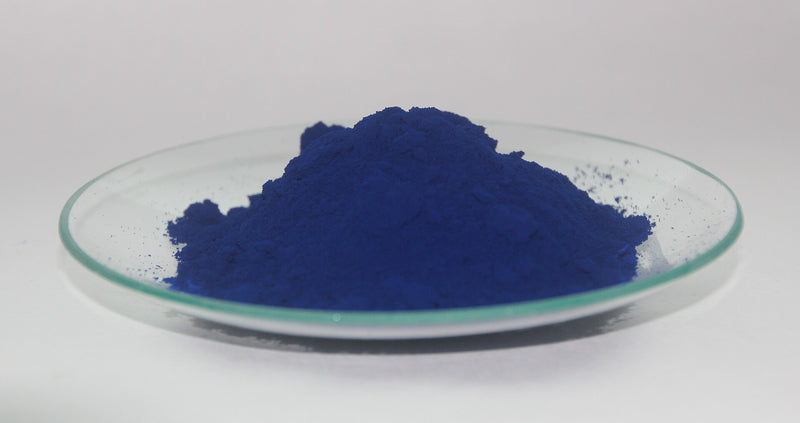
For more than two thousand years painters made their whites from lead corroded in vinegar and dung. It handled beautifully, it was toxic, and centuries later it became the clue that exposed fake Vermeers.
A white made from metal
For most of the history of European painting, a painter who wanted white reached for lead. Lead white was the most important white pigment from antiquity until the end of the nineteenth century, and the Greek writer Theophrastus was already describing how to make it, by exposing lead to vinegar, in the fourth century BCE.1

The classic method, later called the stack or Dutch process, sounds more like farming than chemistry. Strips or coils of lead were set in earthenware pots above a little vinegar, and the pots were stacked in sheds and packed with fermenting horse manure or tanbark. The rotting material gave off heat, moisture and carbon dioxide. Vinegar vapour turned the surface of the metal into lead acetate, and the carbon dioxide then turned that into basic lead carbonate, a white crust that flaked off the metal and was washed, dried and ground.12 Those flakes are where the name flake white comes from. Old recipes allow anything from about a month to two months, and one seventeenth-century English factory left its stacks standing for three weeks. A patent of 1787 swapped the dung for tanbark, partly for a steadier temperature and partly because sulphurous gases from manure could discolour the white.2
Why painters wanted it
Lead white earned its place on the palette. In oil it dries quickly, because lead speeds up the hardening of the oil, and light does not fade it.1 As the paint cures, the lead reacts with the oil to form lead soaps, which give a stiff, durable film.34 Until the nineteenth century it was also the only reliable white paint available, and painters mixed it into other colours to borrow its drying and film-forming qualities.3 Stack-process white has coarse, irregular particles, and paint made from it flows under the brush but holds its shape when left alone, which suits thick, textured impasto.2

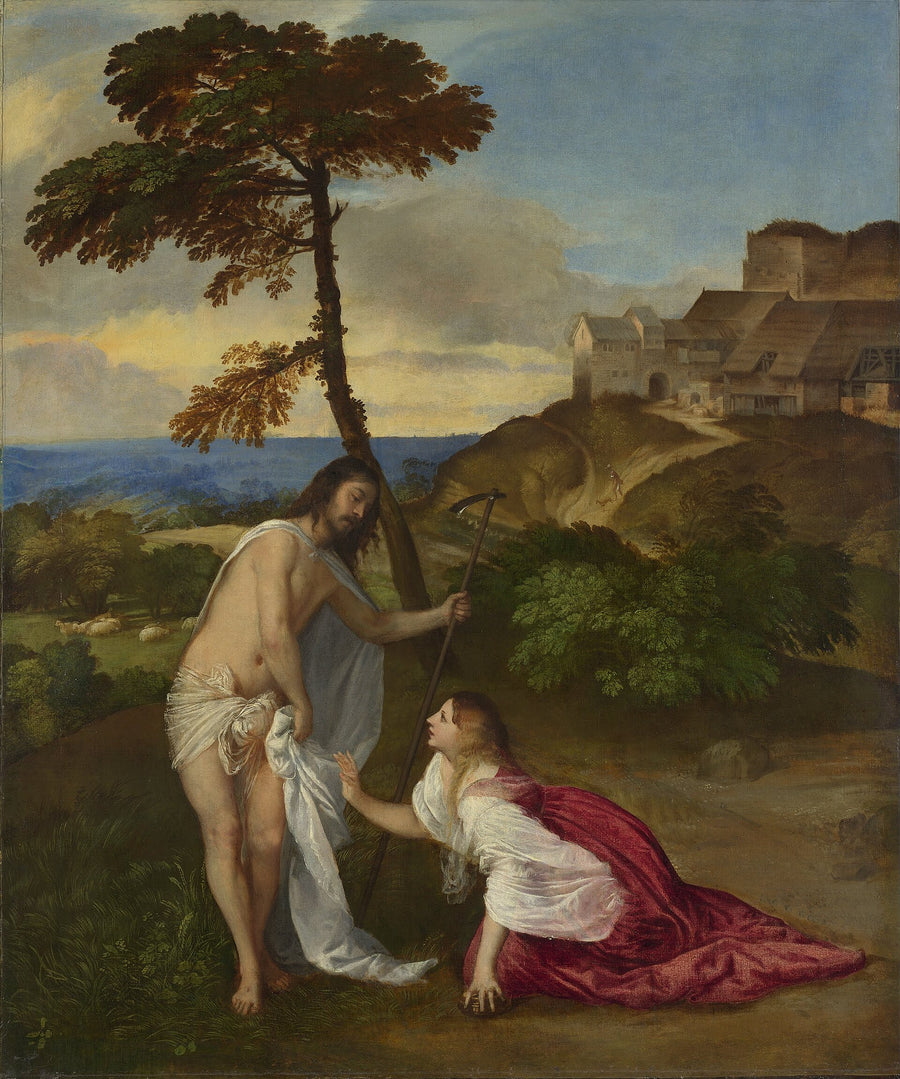
It could be delicate as well as solid. In Noli me Tangere (about 1514), Titian thinned it to make Christ's loincloth semi-transparent and laid it on thickly in the folds of a sleeve.1 Johannes Vermeer used it throughout his paintings, in mixtures, in impasto and in thin veils of colour. He mixed it with red lake for pinks and with ultramarine for bright blues and the cool blue-greys of his tiled floors.5
What lead does to a body
The cost was always there. Lead carried in the blood reaches the brain, kidneys, liver and bones, and the body stores it in bones and teeth, where it accumulates over time. In adults it raises the risk of high blood pressure and kidney damage, and high exposure can cause convulsions, coma and death.6 The pigment remains highly toxic, and ColourLex advises that it should be handled only by people trained to do so.1
That has made lead white the first suspect whenever a famous painter's health failed, though the evidence is usually thinner than the story. Francisco de Goya fell seriously ill in 1793 and was left deaf. A 1972 paper in the New York State Journal of Medicine proposed lead encephalopathy. Others have argued for syphilis, and more recently for Susac syndrome, a rare autoimmune disease. A 2018 review still called his illness an enigma.7
Caravaggio's death in Porto Ercole in 1610 has attracted even more theories. In 2010 a team including the researcher Silvano Vinceti said it was 85 per cent sure it had found his bones in a local cemetery, although the DNA comparison with families sharing his surname was only partial. The bones held high levels of lead, and the team argued that lead poisoning from paint was a major contributor to his death, while conceding that lead alone would not have killed him. A 2018 paper in a Lancet journal, working on the same remains, pointed instead to sepsis, possibly from a wound picked up in his last fight. Murder by the Knights of Malta and by the family of a man he had killed have also been proposed, and nobody has settled it.8
Vermeer, for his part, is often said to have been killed by his materials, but no record supports that for lead. He died in Delft in December 1675, aged 43. In a petition written after his death, his widow Catharina Bolnes described a sudden collapse, saying that "as if he had fallen into a frenzy" he went from healthy to dead within a day or a day and a half. Nothing in the documents mentions lead, and modern writers who speculate tend to suggest a stroke or heart attack.9
The white that caught a forger
Vermeer's connection to lead white turned out to matter more after his death. In the 1930s and 1940s the Dutch painter Han van Meegeren made fake Vermeers good enough to fool experts. One of them, Christ and His Disciples at Emmaus, sold as genuine for about $300,000.10 After the war a supposed Vermeer, The Woman Taken in Adultery, was recovered from Hermann Göring's collection, and van Meegeren confessed. Some sceptics still refused to believe him.11

The lead in the paint answered them. Lead ore contains a radioactive isotope, lead-210, kept topped up by the slow decay of radium-226 in the same ore. Refining the ore into pigment removes most of the radium, so from that moment the lead-210, which has a half-life of about 22 years, starts to run down. In paint a few centuries old the two have come back into balance. In modern paint the lead-210 is still far higher.1011 In 1967 a team at Carnegie Mellon University led by Bernard Keisch measured the paintings and found the paint could not be more than 30 or 40 years old. The same method found two pictures in American collections then attributed to Vermeer, The Lacemaker and The Smiling Girl, to be genuinely old, though other evidence has since moved them to a later follower.1011
Lead white also gives conservators a way to look inside paintings. Lead absorbs X-rays strongly, so passages rich in lead white show up bright on a radiograph, and an X-ray can reveal changes a painter made at different stages and compositions hidden under the visible surface.1213
The replacement
A safer white arrived in the twentieth century. The Norwegian chemist Peder Farup produced near-pure titanium dioxide in 1910, mass production began in Norway in 1916, and titanium white factories spread worldwide from the 1930s.3 Titanium and zinc whites replaced lead white largely because they were less toxic.1 Regulation followed slowly. The International Labour Organization's White Lead (Painting) Convention of 1921 required member states that ratified it to ban white lead in the internal painting of buildings, with a specific exception for artistic painting.14 Some painters still want it. Natural Pigments, an American supplier, has even rebuilt a stack of lead coils in pots with vinegar and manure to make the old flake white the old way.2
- ColourLex, Lead white, ColourLex.
- Natural Pigments, Stack Process White Lead: Historical Method of Manufacture, Natural Pigments.
- Alfie Robinson, How a Norwegian chemist defeated lead paint, Works in Progress, 2025.
- Sarah Sands, Update on Zinc: Search for the Dividing Line, Just Paint (Golden Artist Colors), 2021.
- The National Gallery, Vermeer's palette, The National Gallery, London.
- World Health Organization Regional Office for the Eastern Mediterranean, Lead poisoning and health, WHO.
- J. V. Morant, Sparks over Saturn: A Revision on Francisco de Goya's (1746-1828) disorders, NeuroRegulation, 2018.
- Brian Boucher, Art Bites: Just How Did Caravaggio Die?, Artnet News, 2024.
- Jonathan Janson, Vermeer the man, Essential Vermeer.
- Bernard Keisch, The Mysterious Box: Nuclear Science and Art, United States Atomic Energy Commission, 1970.
- Wei-lun Toh, A veneer of Vermeer, Chemistry World.
- Molly Morris, Radiography can reveal hidden layers within an artwork, Saint Louis Art Museum, 2024.
- The National Gallery, Methods: Vermeer and technique, The National Gallery, London.
- International Labour Organization, Convention (No. 13) concerning the use of white lead in painting, United Nations Treaty Series, vol. 38.