The art war
Vantablack and the licence that started a colour war


How a coating built for space cameras ended up licensed to one sculptor for art, and how Stuart Semple answered with a pink anyone could buy except Anish Kapoor.
A black made for telescopes
Vantablack was unveiled in July 2014 by Surrey NanoSystems, a small British company based in Newhaven, East Sussex, that makes coatings for the aerospace and defence industries.123 The name is an acronym: VANTA stands for vertically aligned nanotube arrays.1 The coating was invented by the company's founder and chief technology officer, Ben Jensen, and its early development took place at the National Physical Laboratory.14
The original version is grown rather than painted. Inside a chamber heated to around 400°C, a process called chemical vapour deposition builds a dense forest of carbon nanotubes standing upright on a surface.1 Light that enters the forest bounces between the tubes until it is absorbed and turned into heat. Measured straight on, the original coating absorbs up to 99.965% of visible light.12 Its intended jobs were practical ones, such as stopping stray light from getting into telescopes and improving infrared cameras on Earth and in space.15
What made it famous was what it does to the eye. Surrey NanoSystems released a photograph of a sheet of crinkled aluminium foil partly coated in Vantablack. The coated area looks completely flat, because the ridges and folds no longer catch any highlight or cast any visible shadow.3 Anish Kapoor, who saw the material early, told reporters in 2014 that it was "blacker than anything you can imagine".6
One artist, one licence
Kapoor was already one of the best known sculptors alive. He won the Turner Prize in 1991, made Cloud Gate in Chicago and the ArcelorMittal Orbit for the London 2012 Olympic Park, and was knighted in 2013.78 In February 2016 it was announced that his studio had been given exclusive rights to use Vantablack in works of art.9 The rights covered the sprayable version, Vantablack S-VIS, and Kapoor and his team were trained to apply it.1011
Surrey NanoSystems explained the deal in practical terms. The coating needs specialist application to achieve its effect, and because it performs beyond the visible spectrum the company treats it as a dual-use material subject to UK export controls. The licence, it said, applied only to the field of art and not to any other sector.12 Many artists saw it differently. The painter Christian Furr put the objection simply: "It isn't right that it belongs to one man."12
Few of the critics questioned Kapoor's talent. Their complaint was that a single artist would be the only one allowed to make art with a particular material and the visual effect that comes with it. Pigments have always travelled from studio to studio, and artists have always borrowed each other's discoveries. An exclusive licence cut against that habit.
The precedent people reached for most often was Yves Klein, whose International Klein Blue is still regularly described as patented. The Centre Pompidou gives a more exact account. Klein showed eleven identical ultramarine monochromes at the Galleria Apollinaire in Milan in January 1957, and on 19 May 1960 he registered the process behind the blue, which kept the pigment from being dulled by its binder, using a Soleau envelope lodged with France's industrial property office. He did not patent the colour itself, and under French law a colour cannot be owned.13 Klein protected a way of making paint. The Vantablack licence decided who could use a material in art at all.
PINK, glitter and a middle finger
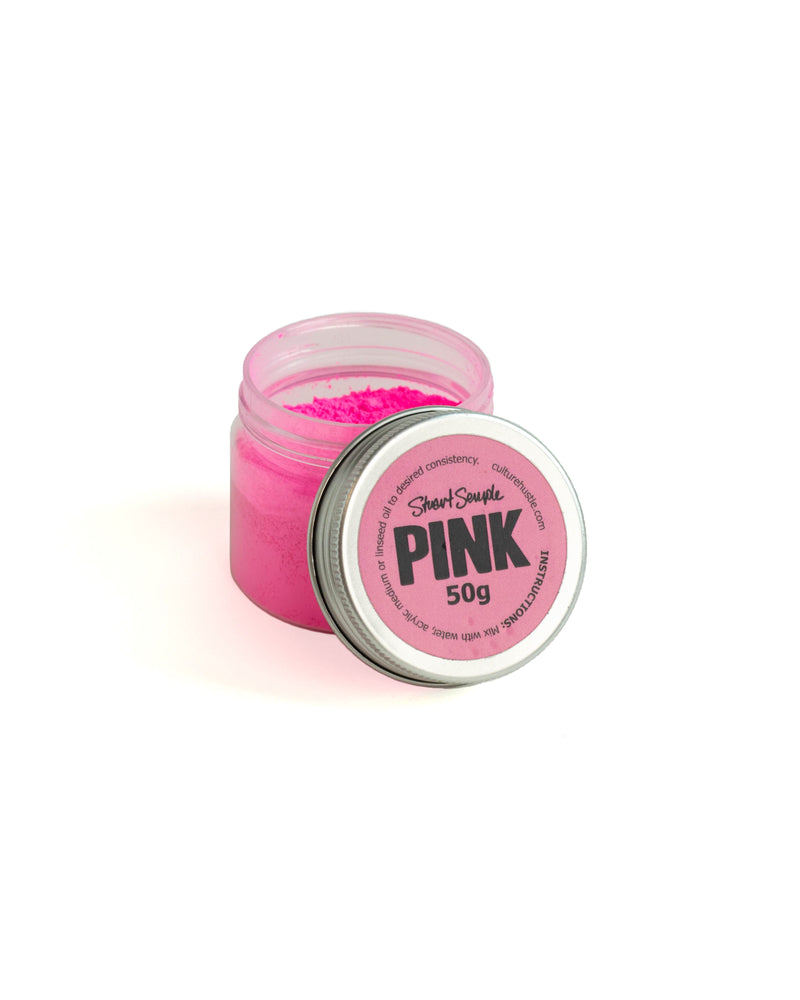
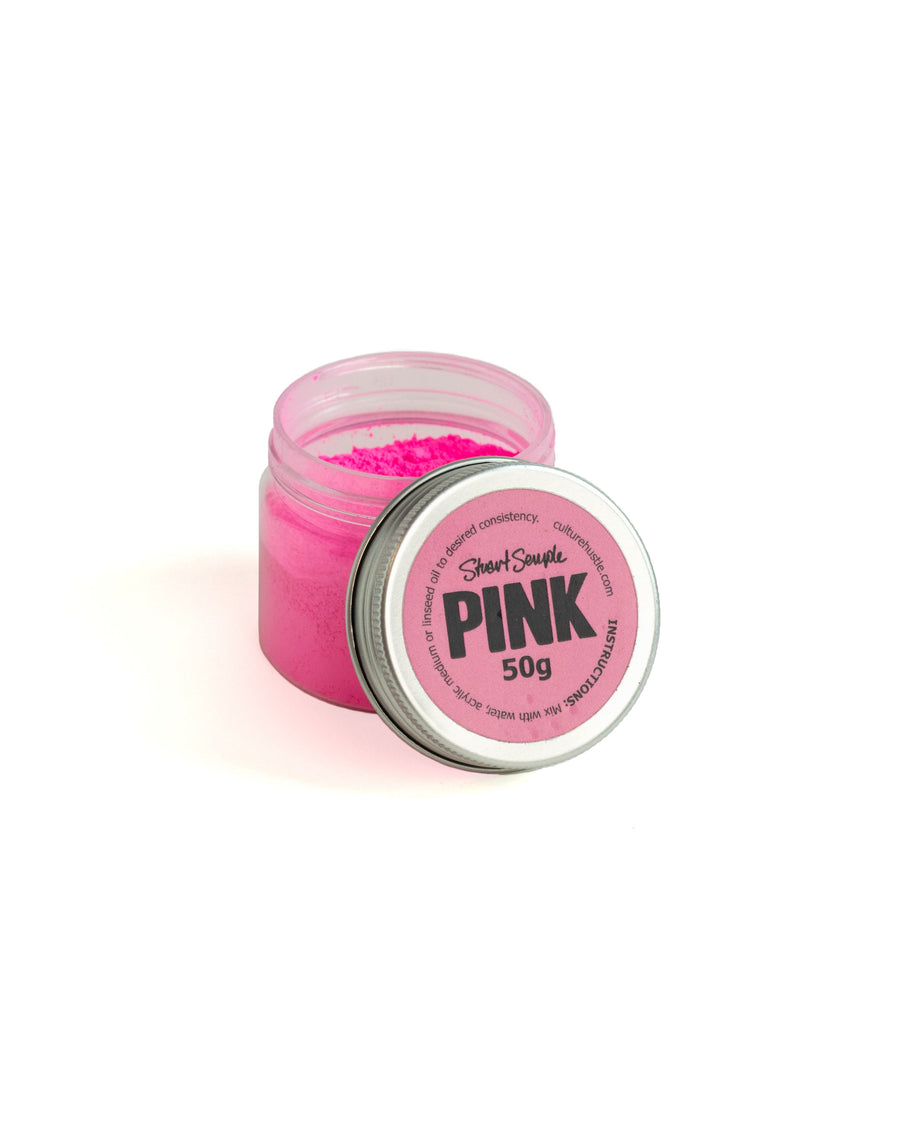
Stuart Semple, who had been making his own pigments for many years, answered with a colour of his own. On 4 November 2016 he released PINK, billed as the pinkest pink, and made it available to everyone except Kapoor. Anyone buying it had to declare that they were not Anish Kapoor, were not buying on his behalf and would not pass it on to him.141516 It was sold without profit in small pots, and it sold out.15

The next material came with the same exclusion. In December 2016 Stuart announced DIAMOND DUST, billed as the world's most sparkly glitter, and made clear that Kapoor was not allowed to use it either.17
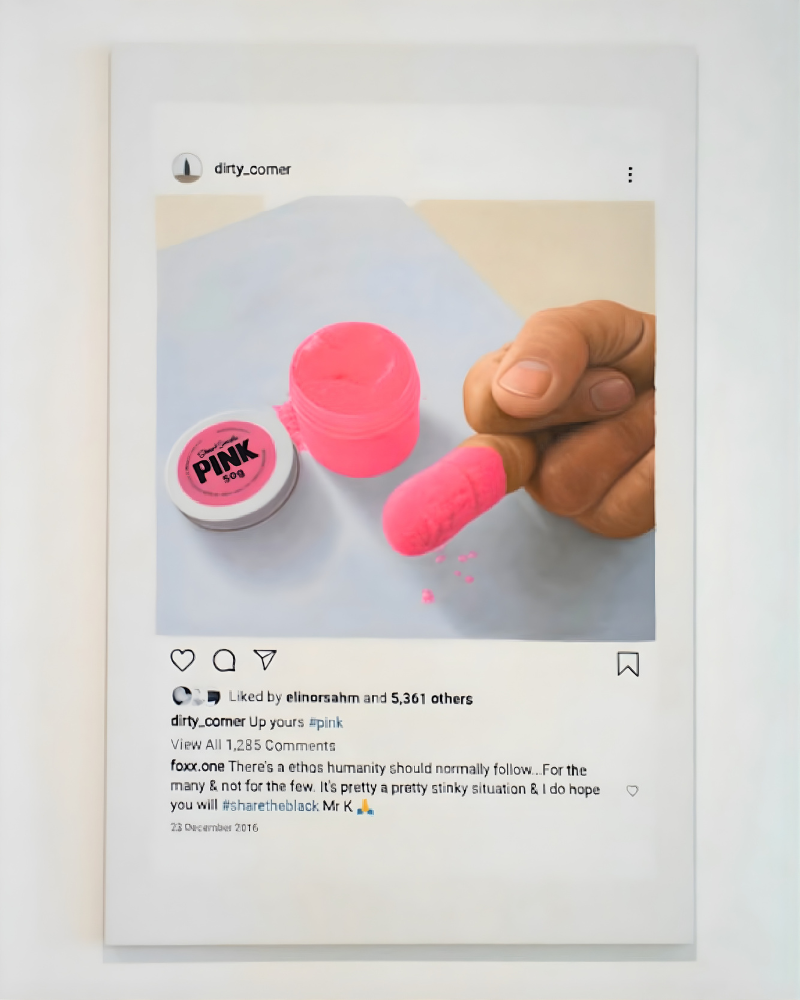
None of this kept Kapoor out for long. On 23 December 2016 he posted a photograph on Instagram of his middle finger dipped in the pink, captioned "Up yours #pink".1518 How he got hold of it was never explained.15 Stuart called it "a very shoddy inside job" and said he wanted Kapoor to "own up, say sorry and give me my Pink back". He also filmed himself writing "I will be good... I will share my colours" a hundred times in chalk on a blackboard.15
BLACK 2.0 and #sharetheblack
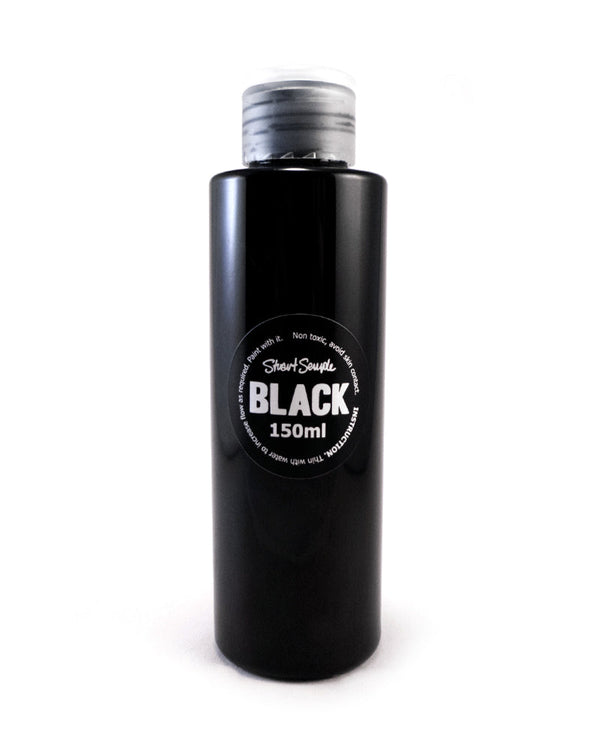
Stuart's next step was a black, and he did not develop it alone. Early versions went out to artists around the world for beta testing, and he later said thousands of emails came back with ideas.19 The result, BLACK 2.0, was released in March 2017 as a matt black that smelt of black cherries. As with PINK and DIAMOND DUST, Kapoor was barred from buying it.20 Stuart promoted it under the hashtag #sharetheblack, and by early 2019 more than 3,500 people had posted about it on Instagram with that tag.2021 "It's about getting the colors out there and making them available," he told Format magazine in 2017.19

BLACK 3.0 on Kickstarter
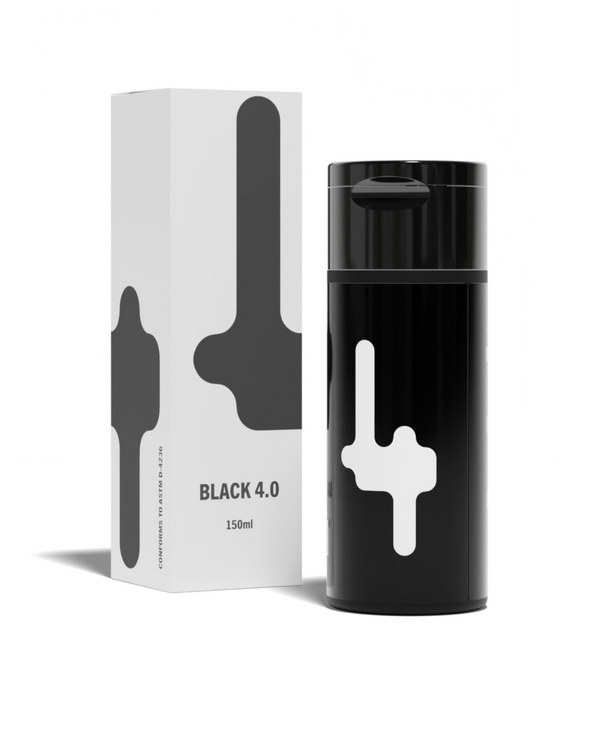
BLACK 3.0 was meant to come closer to the super blacks used in industry while staying a paint that artists could open and use with a brush. Stuart said the team "wanted to make a super-affordable, easy-to-use paint that was familiar to artists".22 Making it in quantity was another matter. He told Artnet it was "way beyond what we can make here in our little studio", so production would move to a factory, and the money to pay for that would come from crowdfunding.21

Before the campaign opened, samples went to about a thousand artists.21 The judging was done by eye. Stuart told Dezeen that the team "did extensive testing with eyes", on the reasoning that the real test of a super black is what it looks like to the person standing in front of it.22
The Kickstarter opened on 28 January 2019 with a goal of £25,000 and passed it in about 38 hours.2321 When it closed on 22 March it had raised £478,923 from 10,648 backers, roughly nineteen times what it had asked for.23 Later that year Cathay Pacific's magazine described it as the second most funded art campaign in Kickstarter's history.24 Every backer had to confirm that they were not Anish Kapoor and were in no way affiliated to him.2122
Launch coverage reported that BLACK 3.0 absorbed up to 99% of visible light, less than the original Vantablack.21 Stuart's own comparison was that Vantablack soaks up light across a broader spectrum, but that within visible light the two look "basically the same".22 It was never presented as a laboratory match for the nanotube coating. Its advantage was that anyone, with one named exception, could buy a pot and paint with it.21
What happened next
Surrey NanoSystems went on to develop other versions of the coating that are not built from nanotubes. In 2018 the architect Asif Khan covered a ten-metre pavilion at the PyeongChang Winter Olympics in one of them, Vantablack VBx2.10 Jensen said it was not as black as the original but looked matt from every angle.10 The company said at the time that it had no plans to license VBx2 exclusively. The artistic licence for S-VIS stayed with Kapoor.10
Kapoor's own Vantablack sculptures were kept out of public view for years. They were shown for the first time in 2022, in his exhibition at the Gallerie dell'Accademia and Palazzo Manfrin in Venice.25
One earlier work became tangled up in the story. Descent into Limbo, a cube-shaped room with a deep hole in its floor, lined so dark that the hole looks like a flat black circle, dates from 1992, more than twenty years before Vantablack existed.2627 In August 2018 a visitor at the Serralves museum in Porto stepped into it, fell about two and a half metres and was taken to hospital.2726 Much of the coverage said the hole was coated in Vantablack.28 Other reports, including Artnet and Gizmodo, described it as dark paint or pigment, as in the original.2729 Which of the two was used for that showing was never clearly settled in public.
As far as public reporting shows, the artistic licence is still in place, and the argument over whether one artist should hold exclusive use of a material continues to come up whenever Vantablack is in the news.
- Wikipedia, Vantablack.
- Bite Sized Britain, The blackest black, made in Sussex.
- Fox News, Scientists develop super black material that the human eye can't see, 2014.
- New Atlas, UK scientists develop super-black material that absorbs 99.96 percent of surface light, 2014.
- Stephen Luntz, New super black material absorbs 99.965% of light, IFLScience, 2014.
- Sarah Cascone, Anish Kapoor adds new 'super black' to his palette, Artnet News, 2014.
- Wikipedia, Anish Kapoor.
- Genesis Prize Foundation, Sir Anish Kapoor's biography.
- Erik Shilling, Artist gets exclusive rights to blackest black ever created, Atlas Obscura, 2016.
- Anny Shaw, Unveiled: Winter Olympics pavilion painted in blackest colour in existence, The Art Newspaper, 2018.
- Sarah Hotchkiss, Anish Kapoor gets blackest black to himself, enrages everyone, KQED, 2016.
- Elizabeth Blair, Some artists are seeing red over a new black, NPR via WBEZ, 2016.
- Centre Pompidou, The untold story of the International Klein Blue (IKB) of Yves Klein, Centre Pompidou.
- Rosie Lesso, Who invented the world's pinkest pink?, TheCollector, 2022.
- Eleanor Gibson, Anish Kapoor flaunts use of "world's pinkest pink" despite personal ban from its creator, Dezeen, 2016.
- Shaunacy Ferro, British artist will sell his new paints to everyone but his nemesis, Mental Floss, 2017.
- Brian Boucher, Artist continues war with Anish Kapoor, bans him from using 'most glittery glitter', Artnet News, 2016.
- Brian Boucher, Anish Kapoor Instagrams surly holiday message to the artist who's trolling him, Artnet News, 2016.
- Jill Blackmore Evans, Stuart Semple and Anish Kapoor: the art world feud over Vantablack and Black 2.0, Format, 2017.
- Sarah Cascone, Vantablack vs. Black 2.0: which is the superblack for you?, Artnet News, 2017.
- Sarah Cascone, Anish Kapoor owns the rights to the blackest color ever made. So another artist made his own superblack, and now it's even blacker, Artnet News, 2019.
- Gunseli Yalcinkaya, Black 3.0 is a "black hole in a bottle" that challenges Anish Kapoor's Vantablack pigment, Dezeen, 2019.
- Kicktraq, The blackest black paint in the world! Black 3.0, Kicktraq.
- David Vetter, The front lines of the art world's colour wars, Cathay Pacific, 2019.
- Lee Cheshire, Anish Kapoor brings the world's blackest black to Venice, The Art Newspaper, 2022.
- India Block, Man injured in Anish Kapoor art accident at Serralves museum, Dezeen, 2018.
- Sarah Cascone, A man fell into Anish Kapoor's installation of a bottomless pit at a Portugal museum, Artnet News, 2018.
- Stella Cattaneo, Anish Kapoor, the challenge to perception, Finestre sull'Arte, 2021.
- Andrew Liszewski, Museum visitor falls into giant hole that looks like a cartoonish painting on the floor, Gizmodo, 2018.